Results for "embedded systems"

Skills you'll gain: WordPress, Content Management Systems, Content Management, Web Content, Web Design and Development, Web Presence, Content Creation, Control Panels, Creativity

Included with Coursera Plus
4.5Rating, 4.5 out of 5 stars2.4K reviews
Coursera
Skills you'll gain: HubSpot CRM, Customer Relationship Management (CRM) Software, Customer Relationship Management, Customer Data Management, Email Marketing, Business Software, Customer Communications Management, Sales Pipelines, Dashboard, Account Management, Data Management, Customer Service, Marketing, Sales Operations, Team Building
Included with Coursera Plus
4.6Rating, 4.6 out of 5 stars1.1K reviews
Skills you'll gain: Spring Boot, Database Design, Object-Relational Mapping, Application Frameworks, Spring Framework, Data Modeling, Database Development, Database Software, Data Mapping, Application Development, Database Architecture and Administration, Requirements Analysis, Data Persistence
Included with Coursera Plus
4.4Rating, 4.4 out of 5 stars30 reviews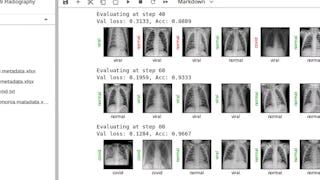
Skills you'll gain: PyTorch (Machine Learning Library), Model Training, Convolutional Neural Networks, Transfer Learning, Image Analysis, Predictive Modeling, Deep Learning, Radiology, Medical Imaging, Computer Vision, Machine Learning, Data Preprocessing, Data Transformation
Included with Coursera Plus
4.5Rating, 4.5 out of 5 stars340 reviews
Skills you'll gain: Productivity, Productivity Software, Consolidation, Collaborative Software, Setting Appointments, Calendar Management, Organizational Skills, Project Management Software, Scheduling, Time Management, Delegation Skills, Team Oriented, Document Management, Workflow Management, Goal Setting, Project Management, User Accounts
Included with Coursera Plus
4.6Rating, 4.6 out of 5 stars783 reviews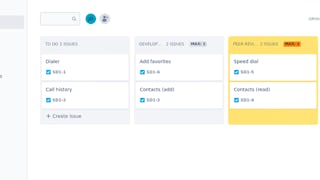
Coursera
Skills you'll gain: Workflow Management, Jira (Software), Product Roadmaps, Collaborative Software, Kanban Principles, Project Coordination, Agile Software Development, Agile Methodology, Issue Tracking, Agile Project Management, Project Management Software
Included with Coursera Plus
4.6Rating, 4.6 out of 5 stars1.1K reviews
Skills you'll gain: Applicant Tracking Systems, Professional Development, Graphic Design, Keyword Research, Content Optimization, Business Writing, Recruitment, Data Visualization
Included with Coursera Plus
4.5Rating, 4.5 out of 5 stars944 reviews
Skills you'll gain: Model Evaluation, ChatGPT, Fine-tuning, Keras (Neural Network Library), Model Training, Applied Machine Learning, Data Preprocessing, Image Analysis, Data Import/Export, Test Data, Machine Learning, Python Programming, Artificial Neural Networks, Deep Learning
Included with Coursera Plus
4.4Rating, 4.4 out of 5 stars35 reviews
Skills you'll gain: Blogs, Content Management Systems, Search Engine Optimization, Content Optimization, Digital Marketing Tools
Included with Coursera Plus
4.5Rating, 4.5 out of 5 stars1.2K reviews
Exploring the Data Analyst role?
Set it as your role and get personalized recommendations

Skills you'll gain: Model Evaluation, Keras (Neural Network Library), Model Training, Tensorflow, Image Analysis, Artificial Neural Networks, Applied Machine Learning, Network Model, Deep Learning, Computer Vision, Machine Learning, Network Architecture
Included with Coursera Plus
4.6Rating, 4.6 out of 5 stars848 reviews
Skills you'll gain: WordPress, Content Management Systems, Web Content, Web Design and Development, Web Design, Web Presence, Web Development, Editing, Social Media, Content Management, Embeddings, Marketing, Design, Computer Science
Included with Coursera Plus
4.4Rating, 4.4 out of 5 stars4.3K reviews
Skills you'll gain: WordPress, Content Management Systems, Web Design and Development, Blogs, Content Creation, Content Management, Business Marketing, Creativity
Included with Coursera Plus
4.3Rating, 4.3 out of 5 stars116 reviews
In summary, here are 10 of our most popular embedded systems courses
- Build a free website with WordPress: Coursera
- Introduction to CRM with HubSpot: Coursera
- Spring Boot with Embedded Database: Coursera
- Detecting COVID-19 with Chest X-Ray using PyTorch: Coursera
- Introduction to Project Management with ClickUp: Coursera
- Get started with Jira: Coursera
- Build a Professional Resume using Canva: Coursera
- Machine Learning with ChatGPT: Image Classification Model: Coursera
- Search Engine Optimization (SEO) with Squarespace : Coursera
- Basic Image Classification with TensorFlow: Coursera










